

Pronunciation
oxy-TOH-sin - Pronunciation guide
Brand Names
- OxoJect
- Oxytocin Injection
Description
 Oxytocin is a hormone secreted by the pituitary gland and stored in the brain. Oxytocin is released during labor, causing contractions of the uterus and milk letdown. It may also be used after foaling to help stabilize the mare's uterus and prevent complications.
Usage
Drugs containing oxytocin may be given to induce labor or to increase contractions during a difficult phase of labor. After foaling, it may be used to stimulate contractions to expel the placenta, control bleeding, and contract the uterus. Some veterinarians use it after breeding to evacuate any excess fluid from the mare's uterus.
Dosage and Administration
 Cyproheptadine Cyproheptadine |
||||
|---|---|---|---|---|
| Method | Dosage (click row for calculator) |
Concentration | Period | Duration |
| To induce labor | ||||
| Intramuscular or Intravenous injection1 | 0.5-10 or 40-120 IU2 | 20 IU/ml | Treatment | NA |
| To increase milk letdown | ||||
| Intramuscular or Intravenous injection | 20 IU | 20 IU/ml | May be repeated every 20 to 30 minutes | NA |
Notes:
|
||||
Side Effects
Sweating, cramping, and colicky discomfort are the most common side effects with use of oxytocin.
Precautions
Oxytocin should not be used if the fetus is in an abnormal position or too large to pass through the birth canal.
Artificial induction of labor has significant risks of complication to both the mare and the foal and should not be used without carefully weighing all risks and benefits.
Oxytocin is FDA approved for use with horses and is a prescription drug restricted to use by or on the lawful written or oral order of a licensed veterinarian.
Oxytocin is not commonly used in competition horses. It is important to check with the individual regulatory group.
Interactions
No drug interaction are noted in the literature.
Overdose
Overdose may cause excessive uterine contractions and possible rupture.
Images
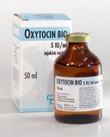 Oxytocin Bio Injection
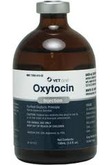 Oxytocin Injection
Literature