
Pronunciation
uh-MEE-noh-glahy-kuh-sides - Pronunciation guide
Brand Names
- Amiglyde-V
- Amikacin E
- Gentamicin
- Gentamicin Sulfate Solution
- Gentasoothe Topical Spray
- Gentaved 100
- Neomycin
- Streptomycin
Description
 Aminoglycosides are a group of antibiotics that are effective against a certain type of bacteria, and are primarily used to treat infections that are caused by aerobic gram-negative bacteria. This group of antibiotics includes at least eight drugs: amikacin, gentamicin, kanamycin, neomycin, netilmicin, paromomycin, streptomycin, and tobramycin.
Aminoglycosides are not effective for anaerobic and most gram-positive bacteria. .
When used to treat infections caused by aerobic gram-negative bacteria, aminoglycosides are often combined with other antibiotics, such as penicillin, for wide-spectrum bacterial treatment.
Usage
In horses, aminoglycosides are commonly prescribed for the treatment of uterine infections, and also to improve conception in breeding mares. These drugs are typically administered by intrauterine infusion.
Aminoglycosides are also used systemically to treat infections. Most veterinarians will sample and culture the bacteria to determine the most effective aminoglycoside to be used in treatment.
Aminoglycosides are not well-absorbed in the gut, so administration is through infusion (uterine), intravenous, or intramuscular injection. There are also topical preparations that can be applied directly to the skin for wounds and abrasions.
Dosage and Administration
 Aminoglycosides Aminoglycosides |
||||
|---|---|---|---|---|
| Method | Dosage (click row for calculator) |
Concentration | Period | Duration |
| 1Infusion into uterus | 2000 mg AMIKACIN E | 250 mg/ml | Daily | 3 consecutive days |
| 2Intravenous, Intramuscular or Subcutaneous injection | 6 mg/kg AMIKACIN Sulfate Injection | 250 mg/ml | Daily | 3 consecutive days |
| 2Intraarticular injection | 125 mg AMIKACIN Sulfate Injection | 250 mg/ml | Daily | 3 consecutive days |
| 3Infusion into uterus | 2000-2500 mg GENTAMICIN Sulfate Solution | 100 mg/ml | Daily | 5 consecutive days |
| 2Intravenous or Intramuscular injection | 2.2 mg/kg GENTAMICIN Sulfate Solution | 100 mg/ml | 3 times daily | 5 consecutive days |
| 2Intravenous, Intramuscular or Subcutaneous injection | 5-7 mg/kg GENTAMICIN Sulfate Solution | 100 mg/ml | Daily | 5 consecutive days |
Notes:
|
||||
Side Effects
Aminoglycosides can be toxic to and cause damage to the inner ear and kidneys. Inner ear damage may affect balance.
Precautions
Aminoglycosides should not be used with other drugs that are known to be toxic to the ears, kidneys, or nervous system.
Some aminoglycoside drugs are not approved for use in horses, but usage is accepted and is a common practice. U. S. federal law restricts these drugs to use by or on the written prescription of a licensed veterinarian.
Aminoglycoside antibiotics are forbidden in drug-free competitions. It is important to check with the individual regulatory group.
Interactions
Use of diuretics in horses being treated with aminoglycosides increases the chances of kidney damage. Certain drugs used in anesthesia may have an increased effect when used with aminoglycosides.
Overdose
Overdose increases the degree of potential damage to the inner ear and kidneys.
Images
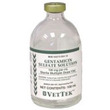 Gentamacin Sulfate Solution
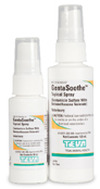 Gentasoothe Topical Spray
Literature
Product labels
- VETROMAX® gentamicin sulfate USP, betamethasone valerate USP and clotrimazole USP ointment (Dechra Veterinary Products)
- GENTAMICIN SULFATE USP, BETAMETHASONE VALERATE, USP, and CLOTRIMAZOLE, USP OINTMENT (Med-Pharmex, Inc)
- Disal® (furosemide) Injection, 50 mg/mL (Boehringer Ingelheim Vetmedica, Inc.)
- Furosemide Injection 50 mg/mL (Clipper Distributing Company, LLC.)
- Furosemide Injection 50 mg/mL (Vedco, Inc.)
- FuroJectFurosemide Injection, 50 mg/mL (Butler Schein Animal Health)
- KetoTRIS + PS FLUSH SOLUTION (Sogeval Laboratories)
- Tildren® (tiludronate disodium) (Ceva Sante Animale)
The drug labels on this website represent drug information listings as submitted to the FDA.The drug labels on this website have not been altered or modified by EquiMed. The drug labels on this website may not be the most current or identical to the current labels shipped with the product. Contact your veterinarian or the manufacturer for the latest information on this drug or medication prior to use.