

Pronunciation
MAK-ro-lide an-tye-by-AHT-iks - Pronunciation guide
Brand Names
- Gallimycin-100 Injectable
Description
 Use of macrolide antibiotics began with the discovery of erythromycin, which was isolated from soil bacteria in the early 1950's. Newer semi-synthethic relatives of erythromycin include claithromycin and azithromycin. Working by inhibiting the production of protein by susceptible bacteria, they may be used alone or in combination with the antibiotic, rifampin.
The macrolide antibiotics include:
- Erythromycin
- Clarithromycin
- Azithromycin
- Tylosin
- Tilmicosin
- Tiamulin
Usage
Macrolide antibiotics are commonly used in the treatment of disease caused by the bacteria Rhodococcus equi, which causes severe pneumonia in foals. Not only does R. equi infect the respiratory tract, causing pneumonia, it also infects the gastrointestinal tract, causing abcesses, and the joints and growth plates, causing septic conditions.
The newer drug, azithromycin has better absorption qualities than the original erythromycin and is less likely to cause gastrointestinal problems. Clarithromycin is considered to be the most effective drug of the three macrolide antibiotics, but an increased incidence of diarrhea is sometimes noted with its use.
Dosage and Administration
 Macrolide Antibiotics Macrolide Antibiotics |
||||
|---|---|---|---|---|
| Method | Dosage (click row for calculator) |
Concentration | Period | Duration |
| Oral Suspension Azithromycin1 | 10 mg/kg | 40 mg/ml | Daily | NA |
| Oral Azithromycin1 | 10 mg/kg | 500 mg/tablet | Daily | NA |
| Oral Clarithromycin2 | 7.5 mg/kg | 250 mg/tablet | 2 times daily | NA |
| Oral Clarithromycin2 | 7.5 mg/kg | 500 mg/tablet | 2 times daily | NA |
| Oral Erythromycin | 11-14 mg/lb | 250 mg/tablet | 2 or 3 times daily | NA |
| Oral Erythromycin | 11-14 mg/lb | 500 mg/tablet | 2 or 3 times daily | NA |
Notes:
|
||||
Side Effects
Mild to moderate diarrhea in foals is a common side effect. Also, hyperthermia, with increased body temperature, has been noted. These side effects are potentially fatal, and foals on erythromycin, azithromycin, and clarithromycin should be monitored carefully. Exposure to heat and light should be limited.
Precautions
Erythromycin is generally not used in horses one year of age or older because of potentially fatal diarrhea occurring in these animals. Foals on macrolide antibiotics should not be turned out during the daytime and exposure to heat should be counteracted with aggressive cooling with cool water, fans, or air conditioning.
Although rare, serious and potentially fatal diarrhea has been reported in mares suckling foals that are on erythromycin. Extra care should be taken to prevent any exposure to the mare. Water buckets and the foal's skin are sources of exposure.
Macrolide antibiotics are not FDA approved for use with horses. They are commonly used with foals and are accepted practice. They are prescription drugs and U.S. federal law restricts these drugs to use by or on the lawful written or oral order of a licensed veterinarian.
Macrolide antibiotics are not used in horses old enough for competition.
Interactions
Erythromycin is generally not used with chloramphenicol or penicillin antibiotics and should not be used with gentamicin.
Erythromycin can delay clearance of the bronchodilator, theophylline, to the point of potential toxicity.
Clarithromycin and omeprazole may increase the serum concentration of one another.
Overdose
Overdose of any macrolide antibiotic can cause severe gastrointestinal side effects.
Images
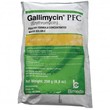 Gallimycin
Literature