

Pronunciation
pol-e-SUL-fa-ted gly-KOS-uh-me-no-gly-kan - Pronunciation guide
Brand Names
- Adequan i.m.
- Adequan I.M. Multidose
- Adequan l.A.
Description
 There is some controversy regarding the effectiveness of polysulfated glycosaminoglycan. Once thought to increase collagen and glycosaminoglycan synthesis in cartilage culltures from normal and osteoarthritic horses, recent research shows it to have little effect.
Normal joints have pads of cartilage protecting the ends of the bones, composed of a surrounding capsule lined by a synovial membrane. Among the functions of the membrane is the production of lubricating joint fluid that reduces friction and wear on joint surfaces.
Polysulfated glycosaminoglycan is similar to this natural fluid, which consists of organic chemicals made up of protein and carbohydrate molecules.
Follow-up studies done at Colorado State University Equine Orthopaedic Research Center show that PSGAG, or Adequan, could prevent defects in cartilage, but could not heal a defect that was already there. "Although we know it does not heal defects left in the joint, it does decrease the rate of further cartilage degradation that probably ensues in most joints."
Usage
Polysulfated glycosaminoglycan is used to treat joint problems in equines and also has an ophthalmic use for experimental management of corneal ulcers.
Commonly, joint injury begins a cycle of inflammation, cartilage damage, and poor quality joint fluid that may lead to irreversible degeneration and degenerative joint disease. Polysulfated glycosaminoglycan is thought to protect cartilage by inhibiting enzymes that break down cartilage and by decreasing inflammation.
The drug is distributed throughout the body after intramuscular administration. It travels quickly through tissues and joints, with the highest levels occurring in inflamed joints.
Dosage and Administration
 Polysulfated Glycosaminoglycan Polysulfated Glycosaminoglycan |
||||
|---|---|---|---|---|
| Method | Dosage (click row for calculator) |
Concentration | Period | Duration |
| Intramuscular injection | 500 mg | 100 mg/ml | Every 4 days | 28 days |
| Intra-articular injection | 250 mg | 250 mg/ml | Weekly | 5 weeks |
| Ophthahlmic | 1-2 drops | 5% PSAG1 | Every 8 hours | NA |
Notes:
|
||||
Side Effects
Side effects from IM injection are rare. The most common side effect is pain at the injection site.
Occasionally, joint injections of PSGAG cause an acute inflammatory reaction in the joint. As a precaution, many veterinarians add antibiotics to PSGAG when injecting the joint.
Precautions
Polysulfated glycosminoglycan should not be used in infected joints.
Polysulfated glycosminoglycan is FDA-approved for use in horses and is a prescription drug. Federal law restricts this drug to use by or on the lawful written or oral order of a licensed veterinarian.
PSGAG is commonly used in competition horses. It is forbidden in drug-free competitions, and the individual regulatory group should be consulted for full information.
Interactions
PSGAG is closely related to heparin. It should be used with caution in animals that are being treated with anticoagulants.
Overdose
No adverse effects are noted in manufacturer's literature.
Images
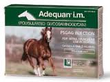 Adequan Injection
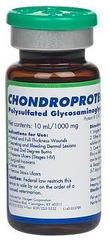 Chondroprotec Injection
Literature
Product labels
The drug labels on this website represent drug information listings as submitted to the FDA.The drug labels on this website have not been altered or modified by EquiMed. The drug labels on this website may not be the most current or identical to the current labels shipped with the product. Contact your veterinarian or the manufacturer for the latest information on this drug or medication prior to use.